Thursday, 20 March 2014

Impressive:Putin address 18 March 2014


Address by President of the Russian Federation on events in The Ukraine / Crimea

Vladimir Putin

President Putin's address - dubbed in English.
Treaty signing ceremony - No translation needed.
Federation Council members, State Duma deputies, good afternoon. Representatives of the Republic of Crimea and Sevastopol are here among us, citizens of Russia, residents of Crimea and Sevastopol!

Preliminary remarks on shared history and some numbers

Dear friends, we have gathered here today in connection with an issue that is of vital, historic significance to all of us. A referendum was held in Crimea on March 16 in full compliance with democratic procedures and international norms.
More than 82 percent of the electorate took part in the vote. Over 96 percent of them spoke out in favour of reuniting with Russia. These numbers speak for themselves.
To understand the reason behind such a choice it is enough to know the history of Crimea and what Russia and Crimea have always meant for each other.
Everything in Crimea speaks of our shared history and pride. This is the location of ancient Khersones, where Prince Vladimir was baptised. His spiritual feat of adopting Orthodoxy predetermined the overall basis of the culture, civilisation and human values that unite the peoples of Russia, Ukraine and Belarus. The graves of Russian soldiers whose bravery brought Crimea into the Russian empire are also in Crimea. This is also Sevastopol – a legendary city with an outstanding history, a fortress that serves as the birthplace of Russia’s Black Sea Fleet. Crimea is Balaklava and Kerch, Malakhov Kurgan and Sapun Ridge. Each one of these places is dear to our hearts, symbolising Russian military glory and outstanding valour.
Crimea is a unique blend of different peoples’ cultures and traditions. This makes it similar to Russia as a whole, where not a single ethnic group has been lost over the centuries. Russians and Ukrainians, Crimean Tatars and people of other ethnic groups have lived side by side in Crimea, retaining their own identity, traditions, languages and faith.
Incidentally, the total population of the Crimean Peninsula today is 2.2 million people, of whom almost 1.5 million are Russians, 350,000 are Ukrainians who predominantly consider Russian their native language, and about 290,000-300,000 are Crimean Tatars, who, as the referendum has shown, also lean towards Russia.
True, there was a time when Crimean Tatars were treated unfairly, just as a number of other peoples in the USSR. There is only one thing I can say here: millions of people of various ethnicities suffered during those repressions, and primarily Russians.
Crimean Tatars returned to their homeland. I believe we should make all the necessary political and legislative decisions to finalise the rehabilitation of Crimean Tatars, restore them in their rights and clear their good name.
We have great respect for people of all the ethnic groups living in Crimea. This is their common home, their motherland, and it would be right – I know the local population supports this – for Crimea to have three equal national languages: Russian, Ukrainian and Tatar.

Twentieth century traumas and the dissolution of the USSR

Colleagues,
In people’s hearts and minds, Crimea has always been an inseparable part of Russia. This firm conviction is based on truth and justice and was passed from generation to generation, over time, under any circumstances, despite all the dramatic changes our country went through during the entire 20th century.
After the revolution, the Bolsheviks, for a number of reasons – may God judge them – added large sections of the historical South of Russia to the Republic of Ukraine. This was done with no consideration for the ethnic make-up of the population, and today these areas form the southeast of Ukraine. Then, in 1954, a decision was made to transfer Crimean Region to Ukraine, along with Sevastopol, despite the fact that it was a city of union subordination. This was the personal initiative of the Communist Party head Nikita Khrushchev. What stood behind this decision of his – a desire to win the support of the Ukrainian political establishment or to atone for the mass repressions of the 1930’s in Ukraine – is for historians to figure out.
What matters now is that this decision was made in clear violation of the constitutional norms that were in place even then. The decision was made behind the scenes. Naturally, in a totalitarian state nobody bothered to ask the citizens of Crimea and Sevastopol. They were faced with the fact. People, of course, wondered why all of a sudden Crimea became part of Ukraine. But on the whole – and we must state this clearly, we all know it – this decision was treated as a formality of sorts because the territory was transferred within the boundaries of a single state. Back then, it was impossible to imagine that Ukraine and Russia may split up and become two separate states. However, this has happened.
Unfortunately, what seemed impossible became a reality. The USSR fell apart. Things developed so swiftly that few people realised how truly dramatic those events and their consequences would be. Many people both in Russia and in Ukraine, as well as in other republics hoped that the Commonwealth of Independent States that was created at the time would become the new common form of statehood. They were told that there would be a single currency, a single economic space, joint armed forces; however, all this remained empty promises, while the big country was gone. It was only when Crimea ended up as part of a different country that Russia realised that it was not simply robbed, it was plundered.
At the same time, we have to admit that by launching the sovereignty parade Russia itself aided in the collapse of the Soviet Union. And as this collapse was legalised, everyone forgot about Crimea and Sevastopol ­– the main base of the Black Sea Fleet. Millions of people went to bed in one country and awoke in different ones, overnight becoming ethnic minorities in former Union republics, while the Russian nation became one of the biggest, if not the biggest ethnic group in the world to be divided by borders.
Now, many years later, I heard residents of Crimea say that back in 1991 they were handed over like a sack of potatoes. This is hard to disagree with. And what about the Russian state? What about Russia? It humbly accepted the situation. This country was going through such hard times then that realistically it was incapable of protecting its interests. However, the people could not reconcile themselves to this outrageous historical injustice. All these years, citizens and many public figures came back to this issue, saying that Crimea is historically Russian land and Sevastopol is a Russian city. Yes, we all knew this in our hearts and minds, but we had to proceed from the existing reality and build our good-neighbourly relations with independent Ukraine on a new basis. Meanwhile, our relations with Ukraine, with the fraternal Ukrainian people have always been and will remain of foremost importance for us.

Dashed hopes of friendship with a separated Ukraine and the dispair of its entire population

Today we can speak about it openly, and I would like to share with you some details of the negotiations that took place in the early 2000s. The then President of Ukraine Mr Kuchma asked me to expedite the process of delimiting the Russian-Ukrainian border. At that time, the process was practically at a standstill. Russia seemed to have recognised Crimea as part of Ukraine, but there were no negotiations on delimiting the borders. Despite the complexity of the situation, I immediately issued instructions to Russian government agencies to speed up their work to document the borders, so that everyone had a clear understanding that by agreeing to delimit the border we admitted de facto and de jure that Crimea was Ukrainian territory, thereby closing the issue.
We accommodated Ukraine not only regarding Crimea, but also on such a complicated matter as the maritime boundary in the Sea of Azov and the Kerch Strait. What we proceeded from back then was that good relations with Ukraine matter most for us and they should not fall hostage to deadlock territorial disputes. However, we expected Ukraine to remain our good neighbour, we hoped that Russian citizens and Russian speakers in Ukraine, especially its southeast and Crimea, would live in a friendly, democratic and civilised state that would protect their rights in line with the norms of international law.
However, this is not how the situation developed. Time and time again attempts were made to deprive Russians of their historical memory, even of their language and to subject them to forced assimilation. Moreover, Russians, just as other citizens of Ukraine are suffering from the constant political and state crisis that has been rocking the country for over 20 years.
I understand why Ukrainian people wanted change. They have had enough of the authorities in power during the years of Ukraine’s independence. Presidents, prime ministers and parliamentarians changed, but their attitude to the country and its people remained the same. They milked the country, fought among themselves for power, assets and cash flows and did not care much about the ordinary people. They did not wonder why it was that millions of Ukrainian citizens saw no prospects at home and went to other countries to work as day labourers. I would like to stress this: it was not some Silicon Valley they fled to, but to become day labourers. Last year alone almost 3 million people found such jobs in Russia. According to some sources, in 2013 their earnings in Russia totalled over $20 billion, which is about 12% of Ukraine’s GDP.

The hijacking of discontent in Maidan and Crimea's appeal to Russia

I would like to reiterate that I understand those who came out on Maidan with peaceful slogans against corruption, inefficient state management and poverty. The right to peaceful protest, democratic procedures and elections exist for the sole purpose of replacing the authorities that do not satisfy the people. However, those who stood behind the latest events in Ukraine had a different agenda: they were preparing yet another government takeover; they wanted to seize power and would stop short of nothing. They resorted to terror, murder and riots. Nationalists, neo-Nazis, Russophobes and anti-Semites executed this coup. They continue to set the tone in Ukraine to this day.
The new so-called authorities began by introducing a draft law to revise the language policy, which was a direct infringement on the rights of ethnic minorities. However, they were immediately ‘disciplined’ by the foreign sponsors of these so-called politicians. One has to admit that the mentors of these current authorities are smart and know well what such attempts to build a purely Ukrainian state may lead to. The draft law was set aside, but clearly reserved for the future. Hardly any mention is made of this attempt now, probably on the presumption that people have a short memory. Nevertheless, we can all clearly see the intentions of these ideological heirs of Bandera, Hitler’s accomplice during World War II.
It is also obvious that there is no legitimate executive authority in Ukraine now, nobody to talk to. Many government agencies have been taken over by the impostors, but they do not have any control in the country, while they themselves – and I would like to stress this – are often controlled by radicals. In some cases, you need a special permit from the militants on Maidan to meet with certain ministers of the current government. This is not a joke – this is reality.
Those who opposed the coup were immediately threatened with repression. Naturally, the first in line here was Crimea, the Russian-speaking Crimea. In view of this, the residents of Crimea and Sevastopol turned to Russia for help in defending their rights and lives, in preventing the events that were unfolding and are still underway in Kiev, Donetsk, Kharkov and other Ukrainian cities.
Naturally, we could not leave this plea unheeded; we could not abandon Crimea and its residents in distress. This would have been betrayal on our part.

The Kosovo precedent

First, we had to help create conditions so that the residents of Crimea for the first time in history were able to peacefully express their free will regarding their own future. However, what do we hear from our colleagues in Western Europe and North America? They say we are violating norms of international law. Firstly, it’s a good thing that they at least remember that there exists such a thing as international law – better late than never.
Secondly, and most importantly – what exactly are we violating? True, the President of the Russian Federation received permission from the Upper House of Parliament to use the Armed Forces in Ukraine. However, strictly speaking, nobody has acted on this permission yet. Russia’s Armed Forces never entered Crimea; they were there already in line with an international agreement. True, we did enhance our forces there; however – this is something I would like everyone to hear and know – we did not exceed the personnel limit of our Armed Forces in Crimea, which is set at 25,000, because there was no need to do so.
Next. As it declared independence and decided to hold a referendum, the Supreme Council of Crimea referred to the United Nations Charter, which speaks of the right of nations to self-determination. Incidentally, I would like to remind you that when Ukraine seceded from the USSR it did exactly the same thing, almost word for word. Ukraine used this right, yet the residents of Crimea are denied it. Why is that?
Moreover, the Crimean authorities referred to the well-known Kosovo precedent – a precedent our western colleagues created with their own hands in a very similar situation, when they agreed that the unilateral separation of Kosovo from Serbia, exactly what Crimea is doing now, was legitimate and did not require any permission from the country’s central authorities. Pursuant to Article 2, Chapter 1 of the United Nations Charter, the UN International Court agreed with this approach and made the following comment in its ruling of July 22, 2010, and I quote: “No general prohibition may be inferred from the practice of the Security Council with regard to declarations of independence,” and “General international law contains no prohibition on declarations of independence.” Crystal clear, as they say.
I do not like to resort to quotes, but in this case, I cannot help it. Here is a quote from another official document: the Written Statement of the United States America of April 17, 2009, submitted to the same UN International Court in connection with the hearings on Kosovo. Again, I quote: “Declarations of independence may, and often do, violate domestic legislation. However, this does not make them violations of international law.” End of quote. They wrote this, disseminated it all over the world, had everyone agree and now they are outraged. Over what? The actions of Crimean people completely fit in with these instructions, as it were. For some reason, things that Kosovo Albanians (and we have full respect for them) were permitted to do, Russians, Ukrainians and Crimean Tatars in Crimea are not allowed. Again, one wonders why.
We keep hearing from the United States and Western Europe that Kosovo is some special case. What makes it so special in the eyes of our colleagues? It turns out that it is the fact that the conflict in Kosovo resulted in so many human casualties. Is this a legal argument? The ruling of the International Court says nothing about this. This is not even double standards; this is amazing, primitive, blunt cynicism. One should not try so crudely to make everything suit their interests, calling the same thing white today and black tomorrow. According to this logic, we have to make sure every conflict leads to human losses.
I will state clearly - if the Crimean local self-defence units had not taken the situation under control, there could have been casualties as well. Fortunately this did not happen. There was not a single armed confrontation in Crimea and no casualties. Why do you think this was so? The answer is simple: because it is very difficult, practically impossible to fight against the will of the people. Here I would like to thank the Ukrainian military – and this is 22,000 fully armed servicemen. I would like to thank those Ukrainian service members who refrained from bloodshed and did not smear their uniforms in blood.
Other thoughts come to mind in this connection. They keep talking of some Russian intervention in Crimea, some sort of aggression. This is strange to hear. I cannot recall a single case in history of an intervention without a single shot being fired and with no human casualties.

Yugoslavia, colour revolutions and US-NATO unilateral 'rule of the gun'

Colleagues,
Like a mirror, the situation in Ukraine reflects what is going on and what has been happening in the world over the past several decades. After the dissolution of bipolarity on the planet, we no longer have stability. Key international institutions are not getting any stronger; on the contrary, in many cases, they are sadly degrading. Our western partners, led by the United States of America, prefer not to be guided by international law in their practical policies, but by the rule of the gun. They have come to believe in their exclusivity and exceptionalism, that they can decide the destinies of the world, that only they can ever be right. They act as they please: here and there, they use force against sovereign states, building coalitions based on the principle “If you are not with us, you are against us.” To make this aggression look legitimate, they force the necessary resolutions from international organisations, and if for some reason this does not work, they simply ignore the UN Security Council and the UN overall.
This happened in Yugoslavia; we remember 1999 very well. It was hard to believe, even seeing it with my own eyes, that at the end of the 20th century, one of Europe’s capitals, Belgrade, was under missile attack for several weeks, and then came the real intervention. Was there a UN Security Council resolution on this matter, allowing for these actions? Nothing of the sort. And then, they hit Afghanistan, Iraq, and frankly violated the UN Security Council resolution on Libya, when instead of imposing the so-called no-fly zone over it they started bombing it too.
There was a whole series of controlled “colour” revolutions. Clearly, the people in those nations, where these events took place, were sick of tyranny and poverty, of their lack of prospects; but these feelings were taken advantage of cynically. Standards were imposed on these nations that did not in any way correspond to their way of life, traditions, or these peoples’ cultures. As a result, instead of democracy and freedom, there was chaos, outbreaks in violence and a series of upheavals. The Arab Spring turned into the Arab Winter.
A similar situation unfolded in Ukraine. In 2004, to push the necessary candidate through at the presidential elections, they thought up some sort of third round that was not stipulated by the law. It was absurd and a mockery of the constitution. And now, they have thrown in an organised and well-equipped army of militants.

Russia offers of cooperation constantly rebuffed

We understand what is happening; we understand that these actions were aimed against Ukraine and Russia and against Eurasian integration. And all this while Russia strived to engage in dialogue with our colleagues in the West. We are constantly proposing cooperation on all key issues; we want to strengthen our level of trust and for our relations to be equal, open and fair. But we saw no reciprocal steps.
On the contrary, they have lied to us many times, made decisions behind our backs, placed us before an accomplished fact. This happened with NATO’s expansion to the East, as well as the deployment of military infrastructure at our borders. They kept telling us the same thing: “Well, this does not concern you.” That’s easy to say.
It happened with the deployment of a missile defence system. In spite of all our apprehensions, the project is working and moving forward. It happened with the endless foot-dragging in the talks on visa issues, promises of fair competition and free access to global markets.
Today, we are being threatened with sanctions, but we already experience many limitations, ones that are quite significant for us, our economy and our nation. For example, even during the times of the Cold War, the US and subsequently other nations restricted a large list of technologies and equipment from being sold to the USSR, creating the Coordinating Committee for Multilateral Export Controls list. Today, they have formally been eliminated, but only formally; and in reality, many limitations are still in effect.
In short, we have every reason to assume that the infamous policy of containment, led in the 18th, 19th and 20th centuries, continues today. They are constantly trying to sweep us into a corner because we have an independent position, because we maintain it and because we call things like they are and do not engage in hypocrisy. But there is a limit to everything. And with Ukraine, our western partners have crossed the line, playing the bear and acting irresponsibly and unprofessionally.
After all, they were fully aware that there are millions of Russians living in Ukraine and in Crimea. They must have really lacked political instinct and common sense not to foresee all the consequences of their actions. Russia found itself in a position it could not retreat from. If you compress the spring all the way to its limit, it will snap back hard. You must always remember this.
Today, it is imperative to end this hysteria, to refute the rhetoric of the cold war and to accept the obvious fact: Russia is an independent, active participant in international affairs; like other countries, it has its own national interests that need to be taken into account and respected.

Thanks to China and India

At the same time, we are grateful to all those who understood our actions in Crimea; we are grateful to the people of China, whose leaders have always considered the situation in Ukraine and Crimea taking into account the full historical and political context, and greatly appreciate India’s reserve and objectivity.

To the people of the United States

Today, I would like to address the people of the United States of America, the people who, since the foundation of their nation and adoption of the Declaration of Independence, have been proud to hold freedom above all else. Isn’t the desire of Crimea’s residents to freely choose their fate such a value? Please understand us.

To the people of Europe - especially Germany

I believe that the Europeans, first and foremost, the Germans, will also understand me. Let me remind you that in the course of political consultations on the unification of East and West Germany, at the expert, though very high level, some nations that were then and are now Germany’s allies did not support the idea of unification. Our nation, however, unequivocally supported the sincere, unstoppable desire of the Germans for national unity. I am confident that you have not forgotten this, and I expect that the citizens of Germany will also support the aspiration of the Russians, of historical Russia, to restore unity.

To the people of Ukraine

I also want to address the people of Ukraine. I sincerely want you to understand us: we do not want to harm you in any way, or to hurt your national feelings. We have always respected the territorial integrity of the Ukrainian state, incidentally, unlike those who sacrificed Ukraine’s unity for their political ambitions. They flaunt slogans about Ukraine’s greatness, but they are the ones who did everything to divide the nation. Today’s civil standoff is entirely on their conscience. I want you to hear me, my dear friends. Do not believe those who want you to fear Russia, shouting that other regions will follow Crimea. We do not want to divide Ukraine; we do not need that. As for Crimea, it was and remains a Russian, Ukrainian, and Crimean-Tatar land.
I repeat, just as it has been for centuries, it will be a home to all the peoples living there. It will never follow in Bandera’s footsteps!
Crimea is our common historical legacy and a very important factor in regional stability. And this strategic territory should be part of a strong and stable sovereignty, which today can only be Russian. Otherwise, dear friends (I am addressing both Ukraine and Russia), you and we – the Russians and the Ukrainians – could lose Crimea completely, and that could happen in the near historical perspective. Please think about it.

On the prospect of Ukraine as a NATO member

Let me note too that we have already heard declarations from Kiev about Ukraine soon joining NATO. What would this have meant for Crimea and Sevastopol in the future? It would have meant that NATO’s navy would be right there in this city of Russia’s military glory, and this would create not an illusory but a perfectly real threat to the whole of southern Russia. These are things that could have become reality were it not for the choice the Crimean people made, and I want to say thank you to them for this.
But let me say too that we are not opposed to cooperation with NATO, for this is certainly not the case. For all the internal processes within the organisation, NATO remains a military alliance, and we are against having a military alliance making itself at home right in our backyard or in our historic territory. I simply cannot imagine that we would travel to Sevastopol to visit NATO sailors. Of course, most of them are wonderful guys, but it would be better to have them come and visit us, be our guests, rather than the other way round.
Let me say quite frankly that it pains our hearts to see what is happening in Ukraine at the moment, see the people’s suffering and their uncertainty about how to get through today and what awaits them tomorrow. Our concerns are understandable because we are not simply close neighbours but, as I have said many times already, we are one people. Kiev is the mother of Russian cities. Ancient Rus is our common source and we cannot live without each other.
Let me say one other thing too. Millions of Russians and Russian-speaking people live in Ukraine and will continue to do so. Russia will always defend their interests using political, diplomatic and legal means. But it should be above all in Ukraine’s own interest to ensure that these people’s rights and interests and fully protected. This is the guarantee of Ukraine’s state stability and territorial integrity.
We want to be friends with Ukraine and we want Ukraine to be a strong, sovereign and self-sufficient country. Ukraine is one of our biggest partners after all. We have many joint projects and I believe in their success no matter what the current difficulties. Most importantly, we want peace and harmony to reign in Ukraine, and we are ready to work together with other countries to do everything possible to facilitate and support this. But as I said, only Ukraine’s own people can put their own house in order.
Residents of Crimea and the city of Sevastopol, the whole of Russia admired your courage, dignity and bravery. It was you who decided Crimea’s future. We were closer than ever over these days, supporting each other. These were sincere feelings of solidarity. It is at historic turning points such as these that a nation demonstrates its maturity and strength of spirit. The Russian people showed this maturity and strength through their united support for their compatriots.
Russia’s foreign policy position on this matter drew its firmness from the will of millions of our people, our national unity and the support of our country’s main political and public forces. I want to thank everyone for this patriotic spirit, everyone without exception. Now, we need to continue and maintain this kind of consolidation so as to resolve the tasks our country faces on its road ahead.
Obviously, we will encounter external opposition, but this is a decision that we need to make for ourselves. Are we ready to consistently defend our national interests, or will we forever give in, retreat to who knows where? Some Western politicians are already threatening us with not just sanctions but also the prospect of increasingly serious problems on the domestic front. I would like to know what it is they have in mind exactly: action by a fifth column, this disparate bunch of ‘national traitors’, or are they hoping to put us in a worsening social and economic situation so as to provoke public discontent? We consider such statements irresponsible and clearly aggressive in tone, and we will respond to them accordingly. At the same time, we will never seek confrontation with our partners, whether in the East or the West, but on the contrary, will do everything we can to build civilised and good-neighbourly relations as one is supposed to in the modern world.

The Crimea referendum and future with Russia

Colleagues,
I understand the people of Crimea, who put the question in the clearest possible terms in the referendum: should Crimea be with Ukraine or with Russia? We can be sure in saying that the authorities in Crimea and Sevastopol, the legislative authorities, when they formulated the question, set aside group and political interests and made the people’s fundamental interests alone the cornerstone of their work. The particular historic, population, political and economic circumstances of Crimea would have made any other proposed option only temporary and fragile and would have inevitably led to further worsening of the situation there, which would have had disastrous effects on people’s lives. The people of Crimea thus decided to put the question in firm and uncompromising form, with no grey areas. The referendum was fair and transparent, and the people of Crimea clearly and convincingly expressed their will and stated that they want to be with Russia.
Russia will also have to make a difficult decision now, taking into account the various domestic and external considerations. What do people here in Russia think? Here, like in any democratic country, people have different points of view, but I want to make the point that the absolute majority of our people clearly do support what is happening.
The most recent public opinion surveys conducted here in Russia show that 95 percent of people think that Russia should protect the interests of Russians and members of other ethnic groups living in Crimea – 95 percent of our citizens. More than 83 percent think that Russia should do this even if it will complicate our relations with some other countries. A total of 86 percent of our people see Crimea as still being Russian territory and part of our country’s lands. And one particularly important figure, which corresponds exactly with the result in Crimea’s referendum: almost 92 percent of our people support Crimea’s reunification with Russia.
Thus we see that the overwhelming majority of people in Crimea and the absolute majority of the Russian Federation’s people support the reunification of the Republic of Crimea and the city of Sevastopol with Russia.
Now this is a matter for Russia’s own political decision, and any decision here can be based only on the people’s will, because the people is the ultimate source of all authority.
Members of the Federation Council, deputies of the State Duma, citizens of Russia, residents of Crimea and Sevastopol, today, in accordance with the people’s will, I submit to the Federal Assembly a request to consider a Constitutional Law on the creation of two new constituent entities within the Russian Federation: the Republic of Crimea and the city of Sevastopol, and to ratify the treaty on admitting to the Russian Federation Crimea and Sevastopol, which is already ready for signing. I stand assured of your support.

Source: http://rt.com/politics/official-word/vladimir-putin-crimea-address-658/


Sunday, 2 February 2014

Princeton Lyman: Previous attempts to ‘bring Eritrea in from the cold’ have proved difficult, but we should still try


LymanPrinceton Lyman is a diplomat and former United States Ambassador to Nigeria and South Africa. The below is a response to Hank Cohen’s blog for African Arguments ‘Time to Bring Eritrea in from the Cold’
See also Amb. David Shinn’s piece: ‘Time to Bring Eritrea in from the Cold (But It’s Harder than It Sounds)’
Ambassador Cohen is right that ending the conflict between Ethiopia and Eritrea is long overdue and would be of great benefit to both countries and the region. The same is true for better relations between Eritrea and the US. But Ambassador Cohen does not mention that the African Union was instrumental in calling for United Nations Security Council sanctions against Eritrea. Not a few Africa countries have been upset by perceived Eritrean actions either in Somalia or elsewhere in pursuing its conflict with Ethiopia. Eritrea has become somewhat of an outlier. And rapprochement has proved difficult.
In 2008, when I was at the Council on Foreign Relations I made a major effort to bring Eritrea and the US together. After months of discussion on how to do this, I suggested to the Eritrean ambassador the Council sponsor a meeting between Eritrean officials and a distinguished group of Americans no longer in government, but with strong backgrounds in the region, to discuss the whole range of issues between our two countries. The idea was that if the meeting were to go well, someone from the administration would join opening the way to more formal government-to-government meetings.
The Eritrean ambassador assured me his government had approved this proposal. I persuaded the outgoing Bush administration to hold off on a designation of Eritrea as a state sponsor of terrorism to give this meeting a chance. Though skeptical, the administration agreed. The list of Americans I had contacted and who had agreed to sit down with such a delegation for two days was impressive, including many former diplomats who had served in the region and others active in humanitarian program in Eritrea. What was still missing was the list of Eritrean participants. Shortly after the inauguration of President Obama, the Eritrean ambassador traveled home, promising me a list of Eritrean delegates when he returned. I did not hear back from him for months. When he finally contacted me, he told me that President Isaias had in fact killed the idea.
This is not to say that improvement in relations between the US and Eritrea does not remain desirable. Nor that any opening to settle the dispute between Eritrea and Ethiopia should not be seized. But it does reflect the reality that the government of Eritrea does not make it easy for such rapprochement. After all this time, and with so much suspicion and accusations, these processes cannot be solved by meetings that have strict preconditions, as Eritrea has often insisted upon, nor without a readiness to address the several issues at stake not just one. Perhaps another try at second track diplomacy might help to start the dialogue. I encourage Ambassador Cohen to pursue that and other ways to advance these worthy goals.

Time to Bring Eritrea in from the Cold – By Hank Cohen

Afwerki2
Eritrean President Isaias Afewerki has stated that ‘Eritrea cannot fulfill its destiny without Ethiopia.’
After being part of Ethiopia for forty years, the people of Eritrea held a referendum in April 1993 and decided to establish an independent state.  The referendum took place in the aftermath of a thirty-year insurgency against two successive Ethiopian regimes waged by the Eritrean Peoples Liberation Front (EPLF). At the same time, an allied insurgent group, the Tigrean Peoples Liberation Front (TPLF), took over power in the Ethiopian capital, Addis Ababa, after the military collapse of the Soviet-supported regime headed by President Mengistu Haile Mariam.
Between 1993 and 1998, the two “brother” governments of Eritrea and Ethiopia, headed by the EPLF and TPLF, enjoyed excellent relations.  They maintained a common economic system that allowed landlocked Ethiopia full access to the Eritrean Red Sea ports of Asab and Masawa, including control of their own handling facilities for the transit of cargo.
The relationship started to cool in 1997 when the Eritreans created their own currency, the Nakfa. They did this without arranging to establish a system of daily settlements for cross border trade between their currency and the Ethiopian Birrh.  This could have been done through a facility provided by the International Monetary Fund. Without such a facility in place, the Ethiopian Government announced that all cross border trade had to be settled in US Dollars.  This resulted in a financial setback for Eritrea because of its limited access to hard currencies.
In 1998, the Eritrean Government complained that Ethiopian government representatives, including police, were beginning to encroach on Eritrean territory near the border town of Badme in southwest Eritrea.  According to Eritrean sources, four of their police officers who went to Badme to investigate turned up dead.  Again, the Eritreans said that they had no choice but to retaliate with military force against the alleged Ethiopian encroachments and murder of their policemen.  The Ethiopian Government denied all of the Eritrean allegations about encroachments and the killing of Eritrean policemen, claiming that the Eritrean military attack was totally unjustified.
Instead of negotiations, the Eritrean action triggered a massive Ethiopian armed response, unleashing a major bilateral war that lasted two years, and that caused approximately 100,000 dead and wounded on both sides.
Under Algerian Government mediation, a cease-fire was accomplished in 2000. In view of the border as the ostensible main issue in contention, the Algerians established the Ethiopia-Eritrea Border Commission (EEBC) to arbitrate the exact boundary line. While the EEBC was doing its work, the long border remained heavily armed on both sides.
The results of the EEBC arbitration upheld Eritrea’s main claims on the border delineation.  The Ethiopian Government made a public statement agreeing to the arbitration result, but insisted that it would not proceed to delineate the final border settlement until they could have bilateral discussions with Eritrea. The Government of Eritrea declared that it was open to discussions without any preconditions, but insisted that Ethiopia first had to delineate the border pursuant to the arbitration decision.  This total stalemate in the bilateral relationship has continued until the present, with both governments holding to their inflexible positions.
Because of the stalemate, the border has remained heavily armed on both sides.  This situation has caused particular hardship to Eritrea. Because of the country’s small population, young men conscripted into the armed forces to patrol the long border have had to serve for indefinite periods without knowing when they would be demobilized and returned to their families. As a result, over the past decade thousands of young Eritrean have ‘illegally’ left their country to seek asylum in the other countries, including Ethiopia, Egypt, Israel, the Emirates and southern Europe.
In addition to the expensive armed camps on both sides of the border, the situation of ‘no peace—no war’ has resulted in a total stoppage of cross border trade, and the loss to Ethiopia of Eritrea’s convenient nearby ports for Ethiopia’s exports and imports.  Ethiopia’s only access to the ocean since the war began has been via the 900 mile antiquated railway from Addis Abeba to the port of the neighboring country of Djibouti at the entrance to the Indian Ocean from the Red Sea.  In addition to the long distance between Djibouti and Addis Abeba, port fees in Djibouti are excessively high.
To make matters worse, both Ethiopia and Eritrea have become ensnarled in the chaos of Somalia since that government collapsed in 1991. The rise of the Islamist group Al Shabab, with abundant assistance from al-Qaeda in the Arabian Peninsula caused Ethiopia to send troops to Somalia at various points from 2006 to the present day. Between 2006 and 2010, the security crisis in Somalia has caused relations between Eritrea and the United States to deteriorate badly. In 2008, the George W. Bush Administration declared Eritrea to be a “state sponsor of terrorism”, thereby triggering US trade, investment, and travel sanctions against Eritrea and its leaders. The reason was the identification of Somali Islamist extremists attending a Somali political dialogue meeting in Eritrea. Indeed, this caused the US Government to become so enraged that the American Assistant Secretary of State for Africa expressed to desire to reopen the EEBC arbitration decision in order to favor the Ethiopian border claims. This request was not adopted.
The Obama administration accused the Eritrean Government of allowing the transit of arms to Al-Shabab – the reason for this  alleged support being that Eritrea wanted to help an enemy of Ethiopia, thereby putting pressure on its neighbour to implement the arbitration decision.
In 2009, Senior Etritrean officials met in Rome with the American Permanent Representative to the UN, Susan Rice, and the US Assistant Secretary of State for Africa, Ambassador Johnny Carson. The American delegation was apparently not satisfied with the Eritrean rebuttal of the allegations about their allowing the transit of arms to Shabab. There were also accusations of Eritrean support to insurgents opposing the Ethiopian regime from within. As a result, Ambassador Susan Rice introduced a resolution in the UN Security Council calling for sanctions against Eritrea.  The resolution, UNSC 1907, was enacted in a watered down version of the original harsh US draft, but nevertheless caused Eritrea to become something of an international pariah.  This situation continues.
However, as far as external support for Shabaab is concerned, all available intelligence indicates that Eritrea has not had any contact since 2009. Earlier intelligence reports, denied by Eritrea as fabricated, indicated that the country was facilitating the transfer of funds to Shabaab – nothing of that sort has been reported since 2009  by any source.  Those of us who know Eritrea well understand that the Eritrean leadership fears Islamic militancy as much as any other country in the Horn of Africa region.
In recent months, positive signals have been coming from both countries.  Eritrean President Isaias Afewerke has been quoted as saying that Eritrea cannot fulfill its destiny without Ethiopia. The Prime Minister of Ethiopia, Hailemariam Desalegn, has said that he is willing to go to Eritrea to engage in dialogue.  In short, the wartime tensions of 1998-2000 no longer have a logical basis for continuing to exist. Normalization of Ethiopian-Eritrean relations promises a win-win future for both nations.
In view of the absence of any intelligence, real or fabricated, linking Eritrea with Shabaab for over four years, the UN Security Council should terminate sanctions imposed in 2009 by UNSC resolution 1907.  Since European Union governments have maintained normal relations with Eritrea since the country’s independence, one of the European members of the UN Security Council should propose a resolution to end the sanctions. The US should agree to abstain rather than veto such a resolution.
To break the stalemate between Eritrea and Ethiopia over the implementation of the EEBC boundary decision, there needs to be a mutually face-saving solution. I propose that Ethiopia offer to accept a symbolic initial takeover by Eritrea of territory awarded by the EEBC, followed by the same day opening of dialogue with a totally open agenda.  This dialogue could have the benefit of a neutral mediator, or not, depending on the wishes of the two governments. Here again, one of the neutral Europeans should have the ability to inspire confidence in both sides.
A normalization of relations, following the end of UN sanctions against Eritrea, would have immediate benefits for both countries. A resumption of Ethiopian use of Eritrean ports would provide economic benefits to both countries with trade resuming in both directions. Both sides would also be able to demobilise the border with important cost savings.
Both countries, of course, continue to have important human rights issues.  Normalization of bilateral relations would make it easier for the US and the international community to encourage political and governance reforms.
Finally, the normalization of relations between the United States and Eritrea would open the door to military-to-military cooperation of the type that would enlist Eritrea in the war against Islamic terrorism in the Horn coming from across the Red Sea.
Yes, the time has come to bring Eritrea in from the cold.
Herman J. ‘Hank’ Cohen is Former Assistant Secretary of State for Africa.

Bringing Eritrea ‘in from the cold’ needs real policy changes by Eritrea’s government – By the Ministry of Foreign Affairs, Ethiopia

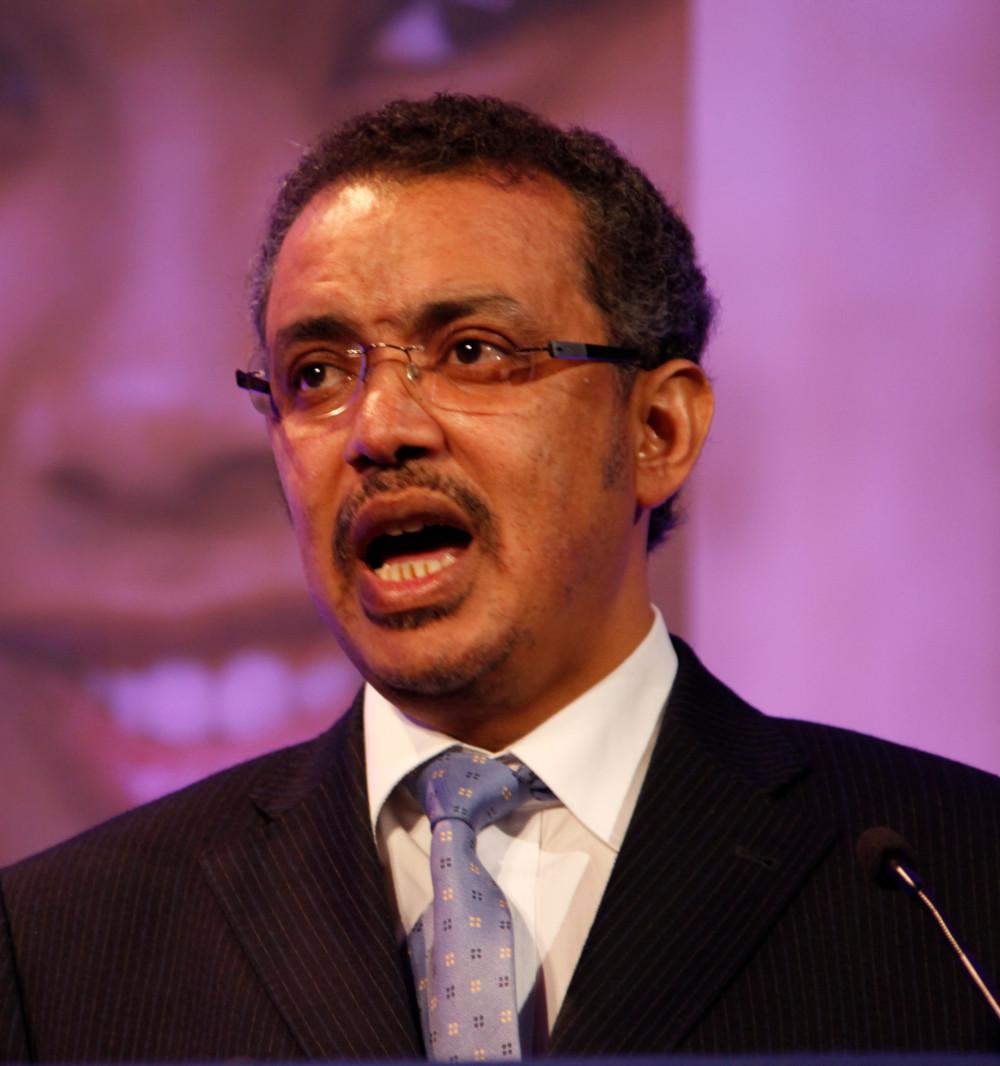
Tedros
Dr. Tedros Adhanom Ghebreyesus, Foreign Minister of Ethiopia.
Every year or two, there’s a wave of suggestions that it might be time for the US to try and once again engage with Eritrea. The latest such effort came in December from former US Assistant Secretary of State for Africa (1989-1993), Herman Cohen in a piece entitled: “Time to Bring Eritrea in from the Cold”. Ambassador Cohen now heads a lobby firm but his recommendation was picked up by former US Ambassador to Ethiopia, David Shinn and by the former US Ambassador to South Africa, Princeton Lyman, both of whom supported the idea but argued (on the same website) that this might not be easy. Ambassador Shinn thought the idea was “harder than it sounds”, while Ambassador Lyman in a masterly understatement said previous efforts by the US had proved “difficult”.  They are likely to continue to be so. Only last October, the Eritrean regime publicly blamed the US (and later the UN) for the Lampedusa tragedy when 366 Eritreans, mainly youngsters, were drowned trying to reach Italy, having fled from their own country. This sort of rhetoric is a commonplace of the Eritrean regime which in the past has claimed the US created the 1998 Eritrean-Ethiopian war, and suggested the  9/11 atrocity was carried out by the US itself. Nevertheless, Messrs. Cohen, Shinn and Lyman seemed to think: “we should try”.
In principle, of course, no one would disagree. Everyone would like to see Eritrea change policies and lose its status as a pariah state, but none of these comments by former US diplomats, get to the heart of the problem. This lies in the nature of the regime in Asmara and, leaving aside its highly repressive internal activities, its external policies. Others, besides the US have tried to improve relations with Eritrea over the years. None have been more than minimally successful.  The reasons are simple and relate largely to Eritrea and President Isaias’ insistence on ignoring all norms of international behavior and international relations. Eritrea has repeatedly demonstrated over the past 23 years that the fundamental principles of its external policies are force, aggression and violence, either open or clandestine. These attitudes also characterize its internal policies. President Isaias operates with little understanding or interest in the wider world, which he has tended to ignore, especially when it fails to treat him with the exaggerated respect he apparently believes he and Eritrea deserve.
In the past neither efforts to establish trust nor attempts to negotiate have made much progress. It is only now as sanctions have begun to cause problems with remittances and offer a possible threat to mining operations which provide the major source of revenue to keep senior army officers and party leaders quiescent, that awareness is creeping in that the regime is facing deep and real economic and social problems. The most recent IMF estimates are that Eritrea’s per-capita GDP adjusted for purchasing power parity will grow only around 1.7% between 2013 and 2018, a mark that will lead to the nation being ranked as the second-poorest country in the world before the end of the decade. This is despite the input of some quite substantial profits from mining, though there have widespread claims that these are dependent upon what amounts to ‘slave labor’.
At the center of the argument of Messrs Cohen and Shinn is the issue of Eritrea’s relations with Ethiopia. Both seem to accept the idea that President Isaias’ hostility to the outside world, the US and everybody else, is caused by insecurity in the face of a continued threat posed by Ethiopia, seen of course, as a US ally. The excuses for the increasing sacrifices demanded of the population is provided by the threat of the “evil, hostile, menace of Ethiopia,” or by the machinations of the US and its control of the UN and indeed almost everybody else. Indeed, to paraphrase an older US diplomat, referring to Stalin’s policies after the Second World War: “A hostile international environment is the breath of life for the prevailing internal system…” The “threat” of Ethiopia is the standard official line provided by Eritrea and has provided the excuse for keeping national conscripts mobilized since 1998, but it no longer appears to be working. The population is hemorrhaging at a rate of 600 people a week across the border with Ethiopia and similar numbers to the Sudan, in spite of shoot to kill orders along the frontiers. According to the UN Special Rapporteur for Eritrea, some of those now crossing the border are unaccompanied children as young as five or six.
In fact, any external danger to the concept or reality of an independent Eritrea vanished in 1991 when the Ethiopian People’s Revolutionary Democratic Front (EPRDF) took power in Ethiopia. The EPRDF played a major role in helping the EPLF win its war for independence. Once in power in Addis Ababa it immediately encouraged the assumption and recognition of Eritrea’s independence. There has been no change of policy since, despite Eritrea’s invasion of Ethiopia in May 1998.
Messrs. Cohen and Shinn go into some detail of the 1998-2000 war, but much of their comment is inaccurate. They also miss the central point, noted by the UN Claims Commission –“Eritrea violated Article 2, paragraph 4, of the Charter of the United Nations by resorting to armed force to attack and occupy Badme, then under peaceful administration by Ethiopia as well as other territory…in an attack that began on May 12, 1998…”. (Claims Commission’s Partial Award Jus Ad Bellum (December 19, 2005), paragraph 16). The war was the result of Eritrea sending pre-prepared mobilized infantry and mechanized brigades across what was, at the time, the accepted administrative border between the two countries.  It was a very clear case of aggression.
Eritrea’s defeat in June 2000 and its signing of a Cessation of Hostilities Agreement, followed by the Algiers Peace Agreement in December, produced no change in attitude. The Algiers Agreements required the creation of a 25 kms wide Temporary Security Zone along the border inside Eritrea, and the deployment of a United Nations Peacekeeping Mission to Ethiopia and Eritrea (UNMEE) to monitor this and the ceasefire. UNMEE was also given the task of providing logistical and security assistance to the demarcation exercise which was due to follow the Decisions of the Eritrea Ethiopia Boundary Commission, announced in  April 2002.
Eritrea began its efforts to underline the Algiers Agreements prior to 2002, and subsequently ignored Ethiopia’s acceptance of the EEBC Decisions in November 2004. Ethiopia had  originally raised some concerns over the EEBC Decisions, but after failing to get satisfaction for these, it made it clear  it was prepared to proceed to demarcation in conformity with international practice, and  consistent with the Algiers Agreements and their aim of bringing about sustainable peace and the normalization  of relations between Ethiopia and Eritrea. However, as soon as Ethiopia accepted the EEBC Decisions, Eritrea openly began to flout the Algiers Agreements, persistently violating the TSZ and imposing restrictions on UNMEE. By 2007, the UN Secretary General noted in a report to the Security Council that the Eritrean troops that had illegally entered the Transitional Security Zone in October 2006, not for the first time, had remained, and that Eritrea had also deployed additional troops accompanied by tanks and heavy armament. He described Eritrea’s restrictions on UNMEE as representing “a serious violation of the Agreement on Cessation of Hostilities of 18 June 2000, the 2001 Protocol Agreement of 17 June 2001 concluded between Eritrea and UNMEE, and relevant Security Council resolutions…”.  When these activities met with no more than mild verbal criticism from the Security Council, it steadily expanded its activities until it had taken over the whole TSZ, rendering the Algiers Agreements, including the Agreement on Cessation of Hostilities, effectively null and void. The Security Council did pass a number of resolutions demanding Eritrea remove all restrictions on UNMEE, but it took any action and in February 2008 the situation reached a point where UNMEE, humiliatingly, was forced to withdraw.
This demonstration of UN weakness encouraged Eritrea in its bellicosity, its aggressiveness and its disregard for international norms, and another example followed almost immediately. In June 2008, Eritrea invaded Djibouti and seized several strategic locations just inside northern Djibouti, including the islands of Doumeira and Kallida. In subsequent fighting nearly sixty Djiboutian soldiers were killed or wounded, and a senior officer and 18 others captured. Eritrean losses amounted to around 200 killed or captured. President Isaias denied there had been any clashes and persisted in this despite all the evidence of fighting. Eventually, two years later, in June 2010, following mediation efforts by Qatar at the request of Djibouti, Eritrean troops withdrew from the border areas, though the government still refused to admit there had been any conflict. A Qatari observation force was deployed to monitor the border area until a final agreement could eventually be reached, but no progress has been made in releasing Djibouti prisoners of war or in reaching a settlement as President Isaias still denies that anything happens. This time, the Security Council did react and imposed sanctions. Subsequently, with no apparent change in Eritrea’s attitudes or policy over Djibouti, extremist support or destabilization policies in the region, the Security Council, not unreasonably, repeated its belief that Eritrea was a threat to international peace and security, and extended sanctions by another 16 months, to the end of 2014.
Another area of activity by Eritrea which also led to the imposition of UN sanctions was over Eritrea’s persistent interference in Somalia and its support for extremist and terrorist organizations there. After the fall of the ICU in Somalia in December 2006, Eritrea gave refuge to Sheikh Hassan Dahir Aweys and other leaders of what later became Hizbul Islam and supported its anti-government operations in Somalia with planeloads of arms as well as training and funds.  These activities included support for Al-Itihaad, Hizbul Islam, and Al-Shabaab, and the  UN Monitoring Group produced detailed evidence of its transactions.  President Isaias has also repeatedly insisted that Al-Shabaab and similar organizations must be considered Somali stakeholders, claiming despite all evidence they are not terrorists and they should be brought into government. Eritrea, unlike all other IGAD states, refused to recognize either the TNG or the current Federal Government of Somalia. It even withdrew from IGAD in anger that other IGAD states refused to follow its line, though it has now asked to return.  It hasn’t changed policy. In 2013, the Monitoring Group on Somalia and Eritrea issued two separate reports and concluded that Eritrea had diversified its support for extremist operations to Sudan, South Sudan, Uganda and Yemen in addition to fronting a number of business operations.
This is, indeed, a government that relies so totally on the fiction of external threats to maintain its own internal legitimacy that whenever and wherever the fantasy appears threadbare, it has deliberately recreated it with another outbreak of violence or aggression. This is in the conflicts it started with Yemen in 1996/7, Ethiopia in 1998-2000 and  Djibouti in 2008. On other occasions it has repeatedly backed opposition forces, extremists and known terrorists, consistently attempting to destabilize Ethiopia and Somalia and interfere in the internal affairs of Sudan and later of South Sudan. Its foreign policy has, in fact, consistently and persistently continued to demonstrate a pattern of aggression and hostility.
In fact, like any bully, Eritrea rapidly backs down when faced by firm action. Indeed, it is clear from past experience that the government in Asmara only responds to the threat of superior strength. Nothing less will produce change. As the UN Monitoring Group reports for both 2012 and 2013, as well as a mass of additional evidence, make clear, Eritrea has continued its efforts at regional destabilization. There has been no change of policy, merely some misrepresentation and verbal fiction. To lift sanctions now would send very much the wrong signals, giving Eritrea a green light to continue its policies of aggression and regional destabilization.
The lack of movement, whether in normalizing relations between Eritrea and Ethiopia, in response to UN sanctions over regional destabilization or UN demands over the conflict with Djibouti, is quite clearly the responsibility of Eritrea, and Eritrea alone. It has nothing to do with Ethiopia or Eritrea’s border “dispute” with Ethiopia. Bringing in Eritrea “from the cold” can only come after a visible change of attitude in Eritrea, with implementation of a fundamental shift in attitude, an end to all aggressive policies, dismantling of training camps for extremists and terrorists, abandoning support for armed opposition groups and all other efforts to destabilize its neighbors. This needs to be accompanied by acknowledgement of the necessity for dialogue and acceptance of the norms of international diplomacy and adult relationships. Then and then only the lifting of sanctions and Eritrea’s reintegration into regional organizations and international politics might follow.
This response was first published on the website of the Ethiopian Foreign Ministry.

Eight Business benefits of resuming economic relations between Ethiopia and Eritrea – By Tony Carroll

CarrollEthiopia and Eritrea ceased business relations upon the commencement of the border war in 1998. While a small amount of barter trade still exists, it is fair to say that trade relations between the two countries are non-existent – this is very much to the detriment of the private sectors in both countries (and across the region).
Since the closure of the border, the economic fortunes of Ethiopia and Eritrea could hardly have been more divergent. While both remain poor countries in terms of per capita wealth, Ethiopia has been among the fastest and growing countries in the world averaging a steady 10% per annum growth for the past nine years. Conversely, as per the chart below, Eritrea has suffered vast fluctuations in its economic growth from a low of – 9% in 2008 to the 2012 level of + 7.5%.
GDP Growth over the years (“Eritrea Country Report.” Global Finance).
Year Real GDP Growth in Percentage
2001 8.8
2002 3
2003 -2.7
2004 1.5
2005 2.6
2006 -1
2007 1.4
2008 -9.8
2009 3.9
2010 2.2
2011 8.7
2012 7.5
Ethiopia has also been a leader in Africa in terms of infrastructure development, especially in the construction of roads, power infrastructure and water supply. Eritrea has endeavoured to rebuild its transportation infrastructure after the border war but progress has been slowed by inaccessibility of finance.  In terms of education, Ethiopia has built dozens of institutions of higher education in the past 10 years and has begun to develop a work force that is increasingly in demand by manufacturers from Turkey, China and India. Despite promising signs of self reliance immediately after Independence, Eritrea continues to find its work force diminished due to emigration and military service.
Last, Ethiopia is rapidly modernizing its domestic and export agriculture whereas as Eritrea still relies on subsistence methods of production – albeit while eschewing food aid.
As a business consultant who has worked on investment in both countries, I am confident that a comprehensive settlement of disputes that underlie the 1998-2000 border war and normalization of economic relations will create myriad benefits, including:
  1. Increase in road, rail and port infrastructure in Eritrea. With assistance from the Chinese, Ethiopia has expended billions on building its transportation corridor to Djibouti. However, for many regions in Ethiopia, Eritrean ports are closer.
  1. Increase in power infrastructure and opening of export markets. By combining their respective sources of power, hydroelectric, wind and geothermal, Eritrean and Ethiopian consumers would benefit from lower costs and greater reliability of supply.
  1. Reduced power and transport costs would increase manufacturing investment in both Ethiopia and Eritrea. Although Ethiopia remains one of the world’s most expensive countries in terms of road transportation costs, there have been a swath of new manufacturing ventures in textiles, apparel and leather goods, driven by low labour costs and increased skill training.
  1. With its port access, Eritrea could also become a manufacturing hub, perhaps even adding strategic value to raw or semi-processed materials coming from Ethiopia.
  1. Renewed access to the US market under the Africa Growth and Opportunity Act (AGOA). In 2004, Eritrea was deemed ineligible for market access benefits offered and while the impact was minimal at the time, Ethiopia has been able to substantially grow its exports to the US in the past five years. The normalization of political and economic relations with its neighbour would not in itself restore AGOA eligibility, but it would demonstrate progress toward that end.
  1. Increased convertibility of currencies. Normalization of economic relations would allow the establishment of banking relations, now non-existent between the two countries. The Nakfa is among the world’s least convertible currencies and an open and transparent exchange with the Ethiopian birr could lower transaction costs for all businesses and consumers.
  1. Return of the commercial sector. As a result of the border war, Ethiopian businesses were expelled from Eritrea and vice versa. This bar has constrained companies from both countries to achieve scale. Moreover, among the most dynamic business communities in Ethiopia for generations were those of Eritrean origin.
  1. Fostering regional integration. Africa is striving to integrate its markets and Ethiopia has been leading in this process by establishing agreements with its neighbours for power and transportation corridors. There has been speculation that Ethiopia seeks membership of the East Africa Community. EAC membership would also provide benefits to Eritrea.
As reported by my friends Ambassadors Cohen, Shinn and Lyman, this appears to be a moment of inflection in the relationship between Eritrea and Ethiopia. Certainly the implementation of the border agreement and the resumption of commercial relations will not be an easy process. However, the economic benefits that would accrue to both countries could be substantial and should motivate leadership in both to expedite the process.
Tony Carroll is Vice President of Manchester Trade and Director of Acorus Capital.